"Something fishy going on”, “Wijninga had hacked WhatsApp”, “WhatsApp lost money because of Watermelon”, “Founders fought each other out of the tent”, “Investors got nervous, and that was the end of the story.”
Quite a lot was written, shared and speculated when Alexander Wijninga and Charl Haas filed for bankruptcy for Watermelon in 2016. The press would not let it go, and each article was worded more juicily than the last. The media storm can be found on the internet forever, but one voice remains absent: that of the main characters themselves.
To change this, I as Watermelon's content marketer interviewed Alexander. I was allowed to ask him anything: an interview without restrictions. In this interview I go deeper into the details around Watermelon's bankruptcy in 2016. What is true of the things that are online? What is their side of the story, and what would they do differently with what they know now?
On a drizzly Tuesday afternoon we meet in what we call the ‘management box’. With a cheerful smile he sat down opposite me. Although this subject had prepared me for a loaded conversation, there is already no sign of that now. “Good that we are doing this!” he said contentedly.
I think so too. Quite a lot is said about Watermelon's bankruptcy. What, do you think, is the biggest misconception you have read?
“So much has been written; the media generally makes up its own little story, and copies each other too. The row I was supposed to have had with Daan, the then CTO, for example. That was no row. Daan had already left Watermelon months before our bankruptcy, and at the time it came across in the media as if we had been shouting each other down the evening before. They gave free rein to the bankruptcy in search of sensation and clicks: it was a children's party. I never experienced there ever being a fight between us. I even had a pizza with him a few years ago,” he chuckles.
But what was the cause of the bankruptcy then?
“Part of the accusations about WhatsApp is true, I can be very honest about that. We were playing the pirate a bit. We were about 20 years old and were working at the time on a social media company, The Next Network. On LinkedIn and Facebook we were already doing a lot, but not yet WhatsApp. From the market we did get a lot of questions about it: what can you do with WhatsApp? At that moment the answer was actually: nothing at all. And that while 600 million people were using WhatsApp at the time.”
So you wanted to start doing something with WhatsApp.
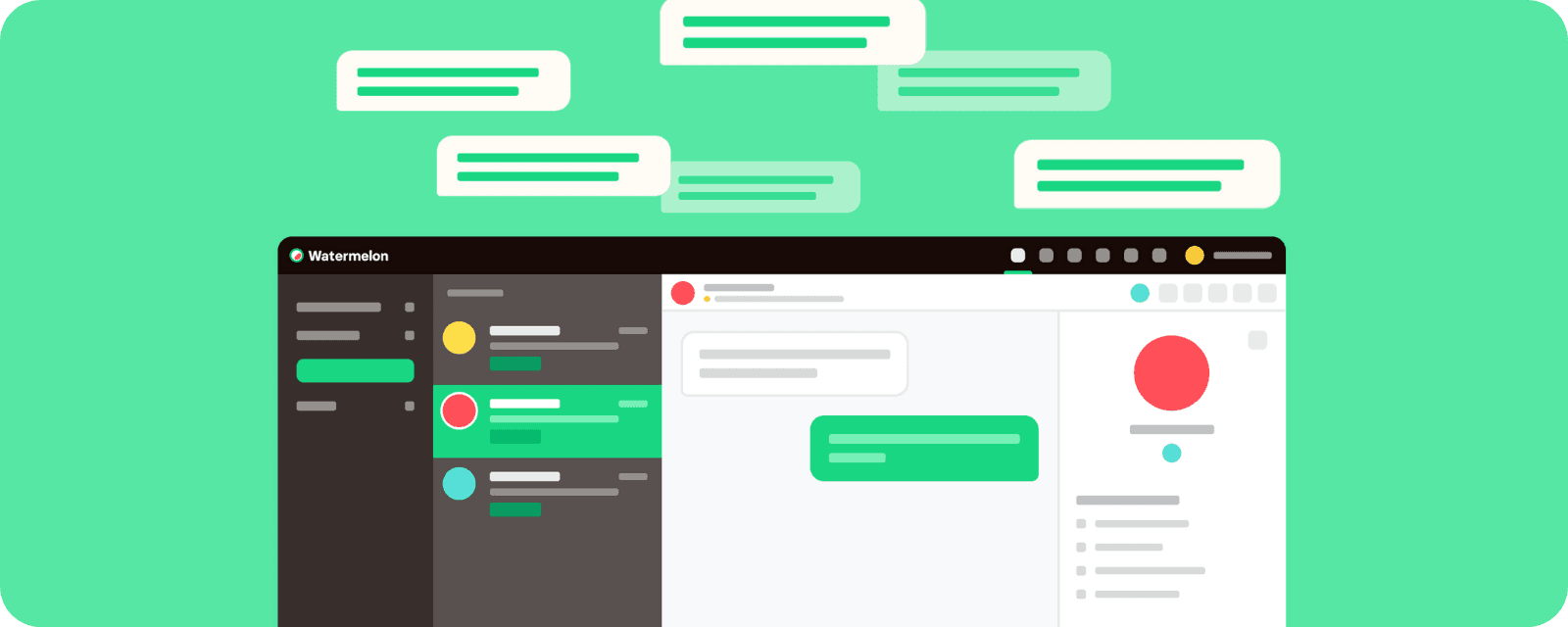
“Yes. We had bought some phones, connected numbers to them, started answering WhatsApp messages for people and sending newsletters via distribution lists – it was a bit of a string-and-sticky-tape job. At a certain point we realised that we were entrepreneurs, not customer service staff, and we went looking for a solution. We thought: what if we made a tool where people can WhatsApp with the whole team? Then we do not have to do it, and that dependence on the phone is gone. Web WhatsApp and WhatsApp Business did not exist yet, after all; there was no other method than WhatsApping via one phone. We thought: this is what we have to do! Charl and I were not that technical yet, so we brought in someone with technical knowledge. No sooner said than done: the tool became reality.”
The start of a tech company, then!
“Yes, and we started full of enthusiasm! While building the tool, though, we faced a new challenge: WhatsApp had no API. In other words: the WhatsApp messages that came in on the phone could not be displayed in the platform. So the tool could not be put live. After an online search we found a way to hack WhatsApp's protocol, which meant the WhatsApp messages did come into our platform. WhatsApp thought our platform was an Android device, while in reality it was an online platform. We had made an Android application out of our platform, which meant we simply received the WhatsApp messages. We built, we tested, and it worked! We thought, what a joke this is. It just works!”
And then?
“Then it suddenly went very fast. We went at it like mad and got a lot of media attention in a short time. In no time we were receiving dozens of sign-ups a day. Companies such as the Dutch tax office joined us, and within a few months we had hundreds of customers. It made no sense at all, that is how fast it went.”
Did WhatsApp notice what you were doing?
“Yes, they knew. At a certain point we also received a letter from WhatsApp's lawyers. It said that we had to stop our practices and hand over the data, because we were abusing the terms and conditions and were not allowed to hack the protocol.”
Where did it then go wrong?
“One evening my business partner was sitting behind the computer, and I saw that he was nervous about something. When I asked him what was going on, he said that the number of one of our biggest customers had been blocked: that of a world-famous record label. The label had just released its newest single and called on millions of listeners to send in questions via the WhatsApp number. That number had gone live half an hour earlier: so we had a serious problem. When we went on looking for a solution, we discovered that not only the label's number had been blocked, but this applied to the numbers of hundreds of other customers too.”
What did you do when you found out that the numbers had been blocked?
“We tried to reconnect everything. This worked, but within a day these numbers were blocked again by WhatsApp. A week later all our customers were blocked. WhatsApp had flagged our server: all the customers we reconnected were blocked immediately. We were not smart and experienced enough to find a way around this, and we actually had no time to find that way around either. Our bank account started to look emptier and emptier and the cash flow was gone. We did the sums, but it was clear that we had only one option left, namely: filing for bankruptcy.”
That must have been an intense period.
“It was a very intense period, indeed. But also a very special period; I would not have wanted to miss it. It made me see who I am, and who I want to become. I learned an enormous amount from the situation. Winding up a company is one of the most valuable things I have ever been through.”
How do you look back on the bankruptcy now?
“Wonderful.”
Are you being sarcastic?
“No, I mean it. I would not have missed it for the world. Do not forget: I was 21 years old. Who cares?! I think everyone should fall flat on their face once.”
What did you learn from it?
“People ask that quite often, but I find it hard to answer. It is literally too much to list. Conversations with the receiver, learning that your company is no longer yours, that other people are bidding on your estate, that your office is no longer yours, that your people are out on the street and what happens to them; and that is just the bankruptcy itself. The whole period before it was also very valuable: everything I learned about building a technical product, how a legal procedure with a party as big as Facebook works, how you deal with media attention when you are declared bankrupt, how you win a prize and go under a month later, what people think of that and how they express themselves about it... And that is a period of two months before the bankruptcy, let alone the period that came before it, the birth of the company.”
You aged 20 years in 2 months, did you not?
“No jokes: I genuinely ended up with a permanent grey streak in my hair from it.” He points grinning to the side of his head, where a few grey hairs can be seen. “A lasting part of my life, that bankruptcy.”
What is the most important thing you learned?
“That you should never give up. If you believe in something, you absolutely have to push on. And a bankruptcy does not have to be something that stands in the way of that. There are always creative ways to get things back on track. The bankruptcy also taught me to be resilient. My mother inspired me greatly at the time. One morning after the bankruptcy I had woken up, I was walking through the house in my pyjamas, and at that moment I had nothing. My company was bankrupt, wound up. My relationship had just ended. It was the very first time in my life that I got up without a goal. I called my mother, and she asked me how I was. I told her in all honesty that I felt a bit ‘meh’, and then she said: You know, Alexander, of everyone in this world you are resilient enough to come out of this again. We ended the conversation, I started thinking about that and I thought: that is right. That was the moment I thought: I am going to buy Watermelon back. We are going to make something beautiful of it.”
And how is the Watermelon of now different from the Watermelon of then?
Everything is different. Not only the house style and the office, but also the proposition, team, level of professionalism, strategy: everything. At the time we were a tool with which you could manage WhatsApp from one platform: now we are a conversational AI platform that automates conversations on conversation channels. And everything we do is legal, no more hacking antics.”
With what you know now, would you have done anything differently?
“I would have done everything differently. Really everything. We really went at it on a wing and a prayer, and just did things. That was fine, that characterised us then. That was also something really beautiful. We won a nice prize with it at the time, but now I would really do that differently.”
How do you see Watermelon in the future?
“Glorious. International: in the European and American market. The greatest strength of our platform lies in the combination of user-friendliness and artificial intelligence. Putting AI on the market in a super user-friendly way: that is a very strong combination, if you ask me. We are just going to go for it.”
Want to know more about the Watermelon of today?
Would you like to stay informed about what Watermelon is doing at the moment? Or would you like to know more about how we help companies automate their customer service? Then take a look at our website, or try it yourself and create a free account!


