Demand for chatbots is growing exponentially and many companies have embraced the chatbot by now. As a result there are plenty of nice chatbot examples that have been set up very creatively or effectively. To give you an idea of how these chatbots have been implemented, this article shows you the approach of different companies. It also shows you which chatbot trends are coming, which gives you the chance to respond to them straight away.
Chatbot Billie - bol.com
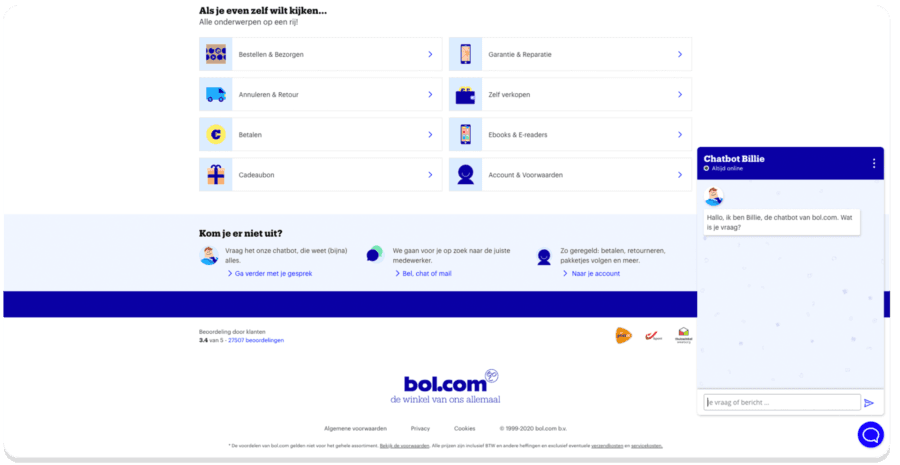
At bol.com they chose to implement a chatbot that has the answer to almost every question. This is hugely successful: Billie receives around half of the customers and handles 70% of their questions without a single member of staff being involved. This makes Billie one of the best chatbot examples of the moment. During Black Friday, Billie did the work of 225 FTE in customer service. Billie honestly admits it when he does not know something and passes you on to a human colleague. The customer service staff could therefore focus on more complex questions, which they now put more time and attention into. The company has put a lot of time into this, which means billie is a completely open chatbot: customers always type out their questions themselves.
Chatbot BB - KLM
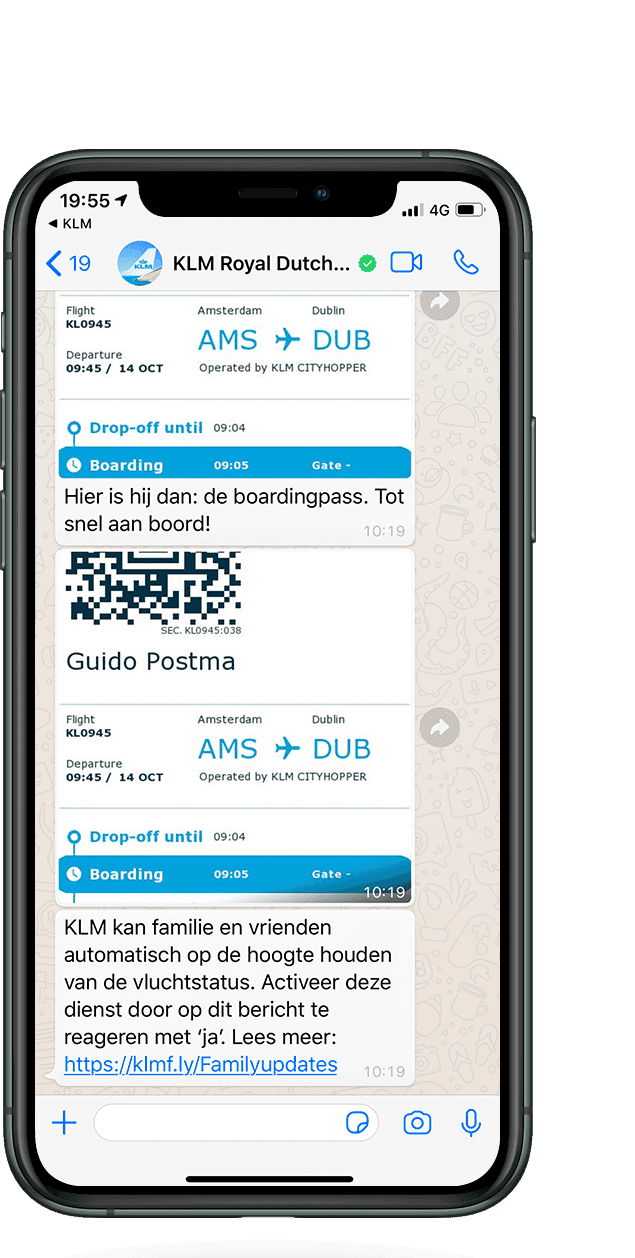
KLM's chatbot is called BB, which stands for blue bot, in line with their brand identity. This chatbot example shows perfectly how proactive you can be. When you decide to connect your KLM account to Facebook, you get your boarding pass sent straight through this channel when you check in and you get the chance to chat with BB there. It is of course also possible to start the conversation yourself without having booked a flight. The bot is at home in every market and will even happily help you pack your suitcase if you ask. Thanks to the chatbot, KLM's customer contact has risen by 40%.
Conversational interface - A.S.R. insurance
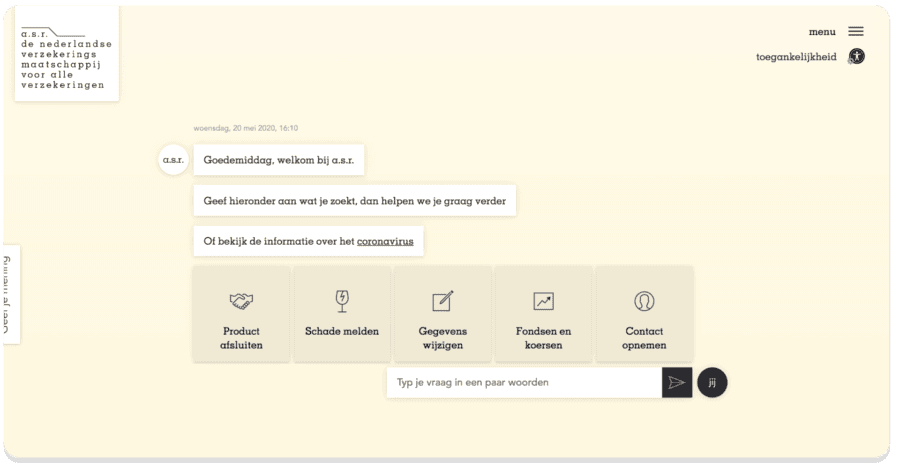
This chatbot is different from the other chatbot examples, because here we are talking about what is known as a conversational interface. When you open A.S.R.'s website you are immediately faced with the chatbot. It guides you through the website, as it were; you click on what you are looking for and are helped on your way straight away. This is one of the chatbot trends you will come across more and more. A.S.R. chose to go live with a minimal product and, through all the information they got from customers' interaction, the bot has eventually become steadily smarter. This shows a lot of nerve but it does bear fruit: around 73% of visitors find their answer by means of the chatbot.
3 important chatbot trends 2020-2012
Because of the dynamic nature of chatbots and explosively developing technologies, new chatbot trends keep arising. To keep up with these developments as well as possible it is important to follow them closely. These are the most important trends of the moment:
1. Payments via chatbots
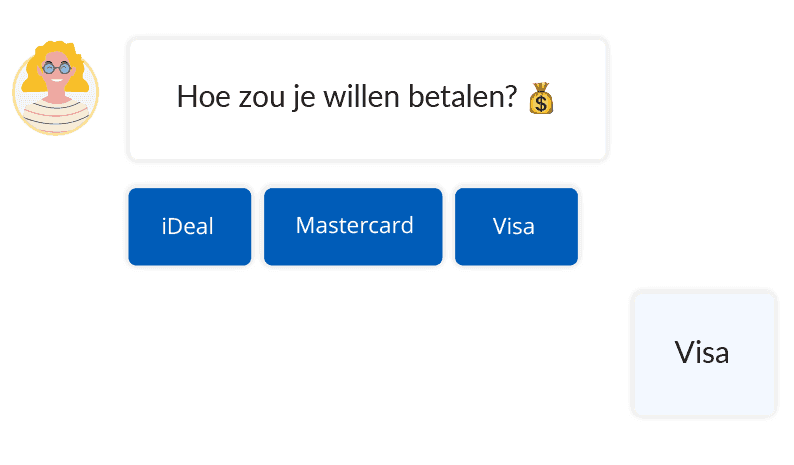
Here and there we already see cases of chatbots offering important functions such as payment options. This is going to happen much more in future. When a bot finds cause during a conversation to move on to payment, it offers different payment methods, for example, after which you are then referred to your bank's payment portal. By being connected to a payment infrastructure the chatbot also collects a lot of valuable data.
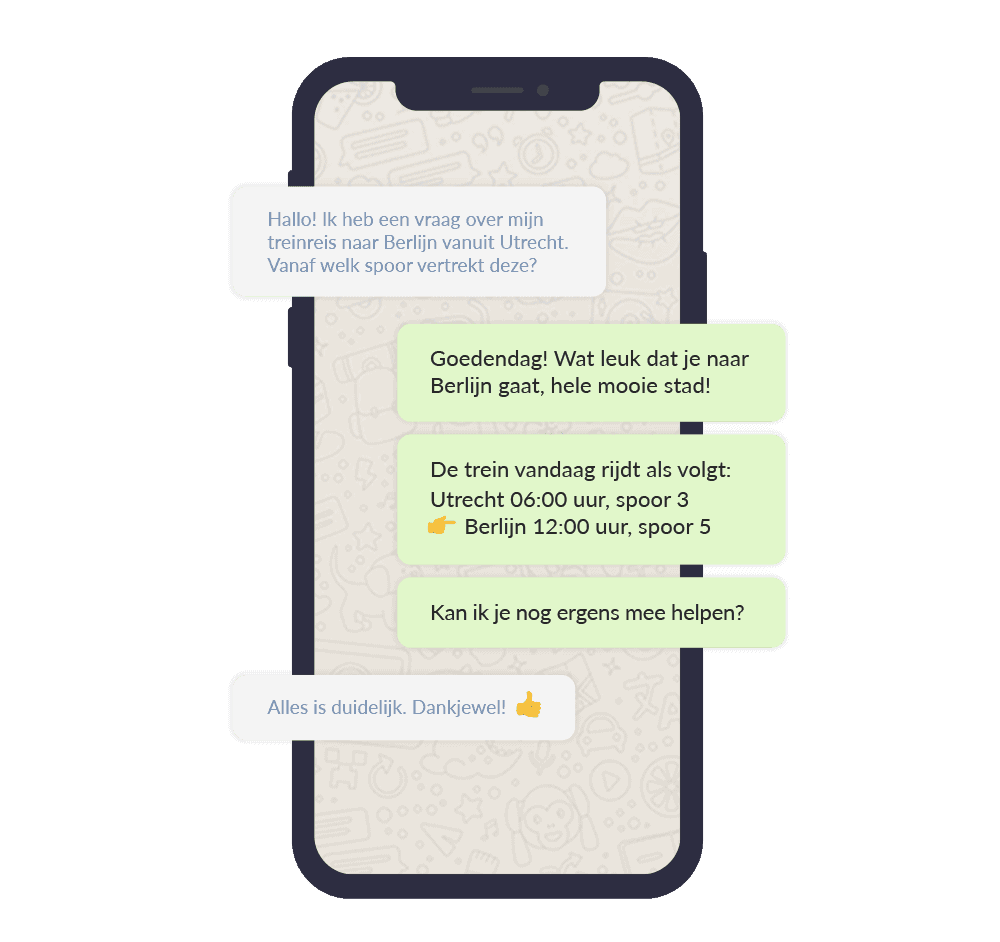
2. WhatsApp chatbots
By now 9 out of 10 Dutch people use WhatsApp, which means all these people are comfortable communicating via this platform. That is why using a WhatsApp chatbot is one of the most important chatbot trends. You use this channel to get closer to your customers and maintain better digital customer contact. Watermelon has been going along with this for a while, by offering the option of implementing your chatbot on several channels at once, including WhatsApp.
3. Voice bots
As predicted by Forbes Magazine, in 2020 voice-driven search terms on Google will be almost 50% of total search terms. This already shows how important voice control is. Now that people are getting used to searching by means of voice control, it is a logical step to give your customers the chance to talk out loud with your chatbot too. By implementing this you keep up flawlessly with developments in technology.
Emotionally developed chatbots
By training your chatbot in the right way and thinking carefully about what it will answer to particular questions, you teach it to identify which emotion the customer is feeling. If the phrasing of a question shows that the customer is cheerful, sad, angry or irritated, then the bot responds to that too. This makes people feel understood sooner, which raises your customer satisfaction. In 2020-2021 chatbots with a high EQ are making their entrance fast and you will soon fall behind if you do not take this into account.
Now it is your turn
By looking carefully at chatbot examples and keeping up with the newest trends you make sure you put together the perfect chatbot. Would you like to know more about implementing chatbots and how to make the best use of them? Then download the whitepaper below this article.


