The success of your chatbot is determined by various factors. At Watermelon's Customer Success department we occupy ourselves with optimising your chatbot. That way we can turn our technology into your favourite digital colleague. Our approach to this differs. We have a wide range of customers, after all, and these customers all have varying and unique wishes. Various factors we take into account are, for example, the tone of voice of the bot, the persona and the bot's answers. Would you like to know how you can use Watermelon's platform to create your ideal digital colleague? Then read our 8 tips on how to go from chatbot newcomer to champion in this article.
1. Create a persona
After calculating all the customer's different wishes, we start with the persona. Who do your customers see as the ultimate customer service employee? Is it a man, a woman, an old or a young person? What does this person look like? Determine the possible hobbies for your bot, and create the character that belongs to him or her.
Focus in particular on your chatbot's name. By giving him or her a name you create a clear picture. Dive into the depths and dig beneath the surface, have a brainstorm. Perhaps you are wondering why these details matter. This is because you want your chatbot to come across as approachable. Not a new piece of technology, but a personal help. Think of all the visual aspects that could possibly help with creating a persona. Have your avatar wear a suit when you want to create a businesslike atmosphere, and do exactly the opposite when you want a playful bot.
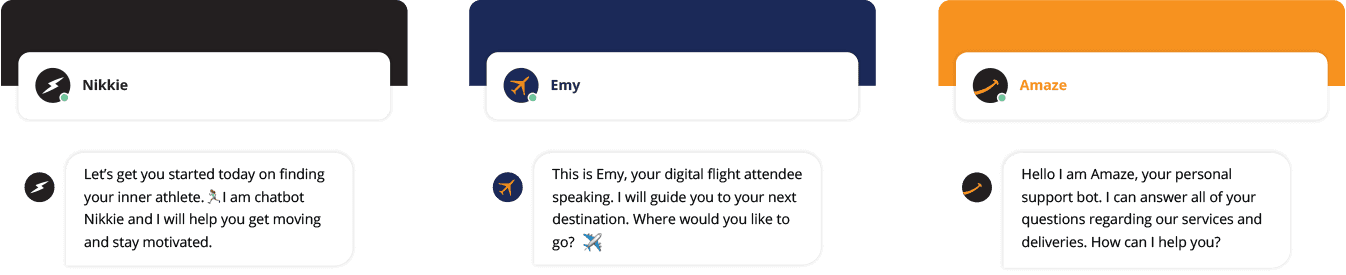
2. Adapt the tone of voice
When the bot's persona has been established, you can start on the tone of voice he or she carries. Think of the character you have just brought to life. Is that character funny? Or is he not the person for GIFs and jokes. Determine whether your bot wants to keep a certain professional distance, or whether it should feel more like a personal friend. Make sure it has a gender-neutral approach, in order to avoid prejudice. When your customer wants more info about a particular car, for example, do not assume that this person is automatically a man. This way you assure a space in which everyone feels welcome and included.
3. Build your chatbot as a team
The saying goes ‘There is no I in team’. The same applies to the word chatbot. Building your bot is a multidisciplinary matter. Your customers are a broad selection of different people, who all have a unique way of thinking. So they all have different questions to ask too. When you build your chatbot alone, or with only a small selection of people, you run the risk of misjudging your customers' mindset.A good tip for meeting your customers' needs is to involve your current customer service staff in the chatbot's build process. Do not only involve marketers or technicians in the process, but those who actually know what customers ask.
4. Do not make a copy of your website
The information you add to your chatbot has to be of use, and not already easy to find on your website. You want to help your customers with the type of information and questions they appear to need assistance with. These questions are the type of questions that occur repetitively and are asked often. They are the type of questions your customers would normally call or email about. Instead of updating your whole website, you can have your chatbot help with subjects that are hard to find. By adding a chatbot to your company you ensure that your customers find what they are looking for.
5. Be specific
Your customers are looking for something they cannot easily find. They want to know when and where the question can be answered. A common introduction for the chatbot is a message such as “Hello, I am chatbot ...”. This is a nice and personal message, although you may also want to add a hint describing what the chatbot can help you with. By filling in the chatbot's specialities, your customers know exactly where they can turn, and to whom. This guides your customers to the right place. Do not see your chatbot as a new or extra channel, but as a new way of communicating.
6. Guide your customers with conversation flows
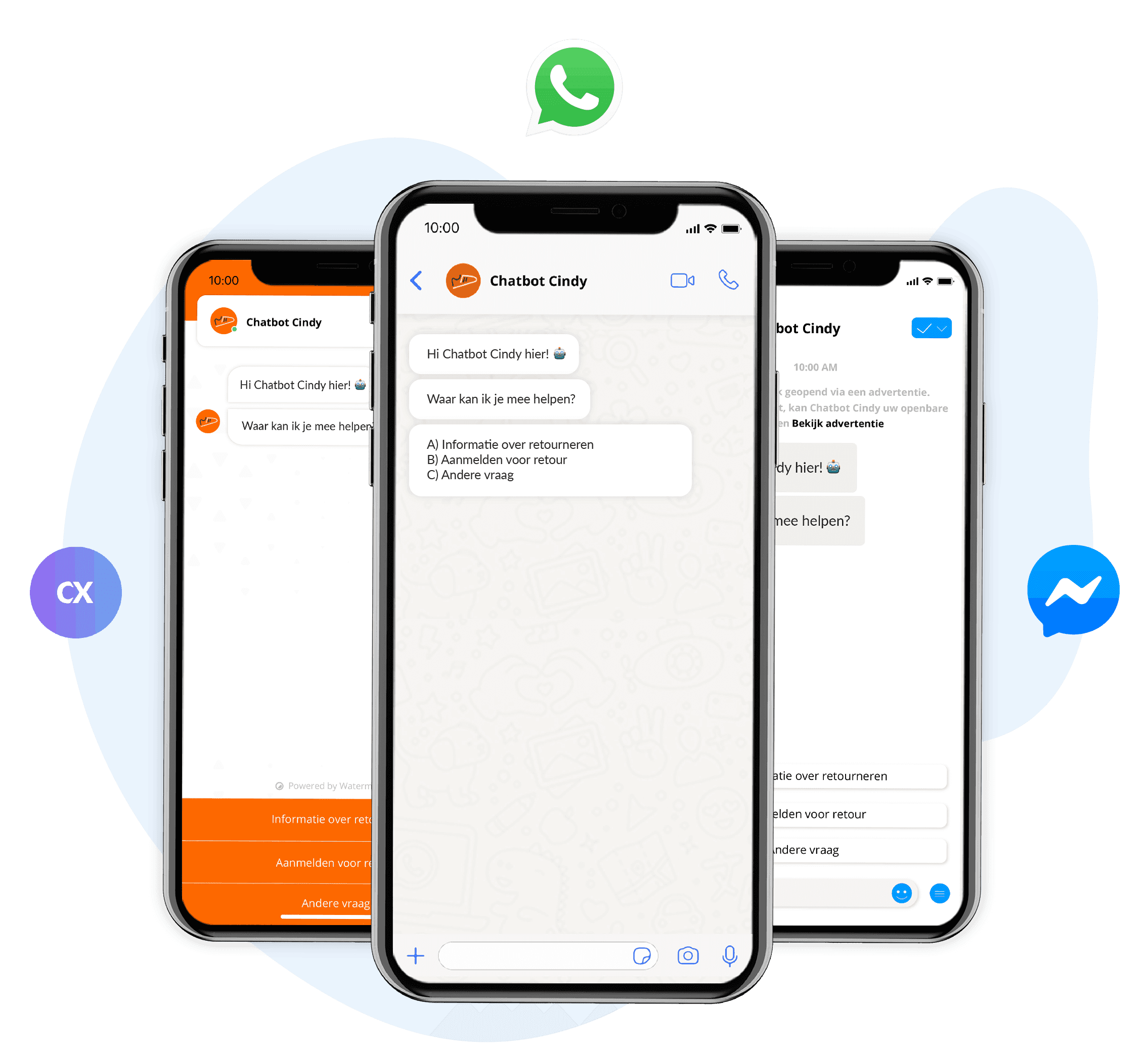
Chatbots and Artificial Intelligence are relatively new technologies. Among older generations in particular there can be a lack of knowledge about the software. They may not know what to type in or how to ask something. By adding a closed answer menu, you guide your customers to the answer they are looking for. On top of that you can deploy conversation flows to offer guidance to your customers. Add a clear structure, and make sure your chatbot offers a response to your customers. Think of your normal customer service. When you normally call, you are asked questions such as “what is your email address?” or “what is your customer number?”. Add similar questions to your chatbot's conversation flow so that it can give an answer as specific and adequate as possible. Most chatbot platforms only offer simple question and answer pairs, instead of conversation flows. This hardly brings customers to the right place, because the bot has trouble understanding human nuances. In that case the chatbot only recognises a particular word and then tries to link an answer to it as best it can. It is rarely the case, though, that this happens adequately straight away.
7. Go live!
You can make several conversations and test for a year, only to come to the conclusion when you go live that you have not entered the right information. You learn most from your customers. That is why you want to go live as fast as possible. Learning live is the motto. Learn from your customers and keep learning from the moment you go live.
Text continues after the image.
8. Assist your new colleague
After you go live you cannot simply send your new digital out into the wide world. Your bot needs a bit of support. Just like an ordinary new colleague, your bot needs assistance. Do not look at your chatbot as a piece of technology that will manage on its own. You want your bot to behave in a human way. But to behave like a human, you need help from a human. In an ideal world, your chatbot is monitored and assisted during the first month from going live. This is not immediately necessary, though. As long as you keep an eye on your new digital colleague.
My job at Customer Success is to turn all these tips into real, tangible chat systems. This is succeeding so far. At Watermelon we have a wide range of customers, and these customers all use our platform in different ways. Thanks to our Customer Success managers, we help turn every dream and vision into a unique reality. This is exactly how we make our core values at Watermelon a reality. By realising our customers' dreams, we realise our own. Customer service, better, faster and more enjoyable!
Start today!
Would you also like to build your own chatbot? Start straight away with Watermelon's all-in-one platform! Create a free account.


