By applying good omnichannel communication you create a stronger brand feeling than ever. (Potential) customers find your brand across different social media channels and find the same tone of voice there, matching colour combinations and cross-media product promotions. By creating a strong brand feeling you improve customer service, raise customer loyalty, make an emotional connection with a customer and motivate them to buy the products from your company. How you do this by means of omnichannel communication you can read in this article.
What is omnichannel communication?
Omnichannel communication is an approach in which you let several channels flow seamlessly into one another. Companies look at every possible channel their target audience uses and turn these into a single clear, integrated brand experience. Here we are talking not only about the tone of voice, but also about the layout of the profiles on all channels and about the flow from one channel to another. With omnichannel communication it is possible, for example, to buy your product straight through Facebook, without having to go to the website first. Another example is when by sharing particular posts on Instagram you collect loyalty points on your customer card that you would normally only get in the physical shop.
Why is omnichannel communication important?
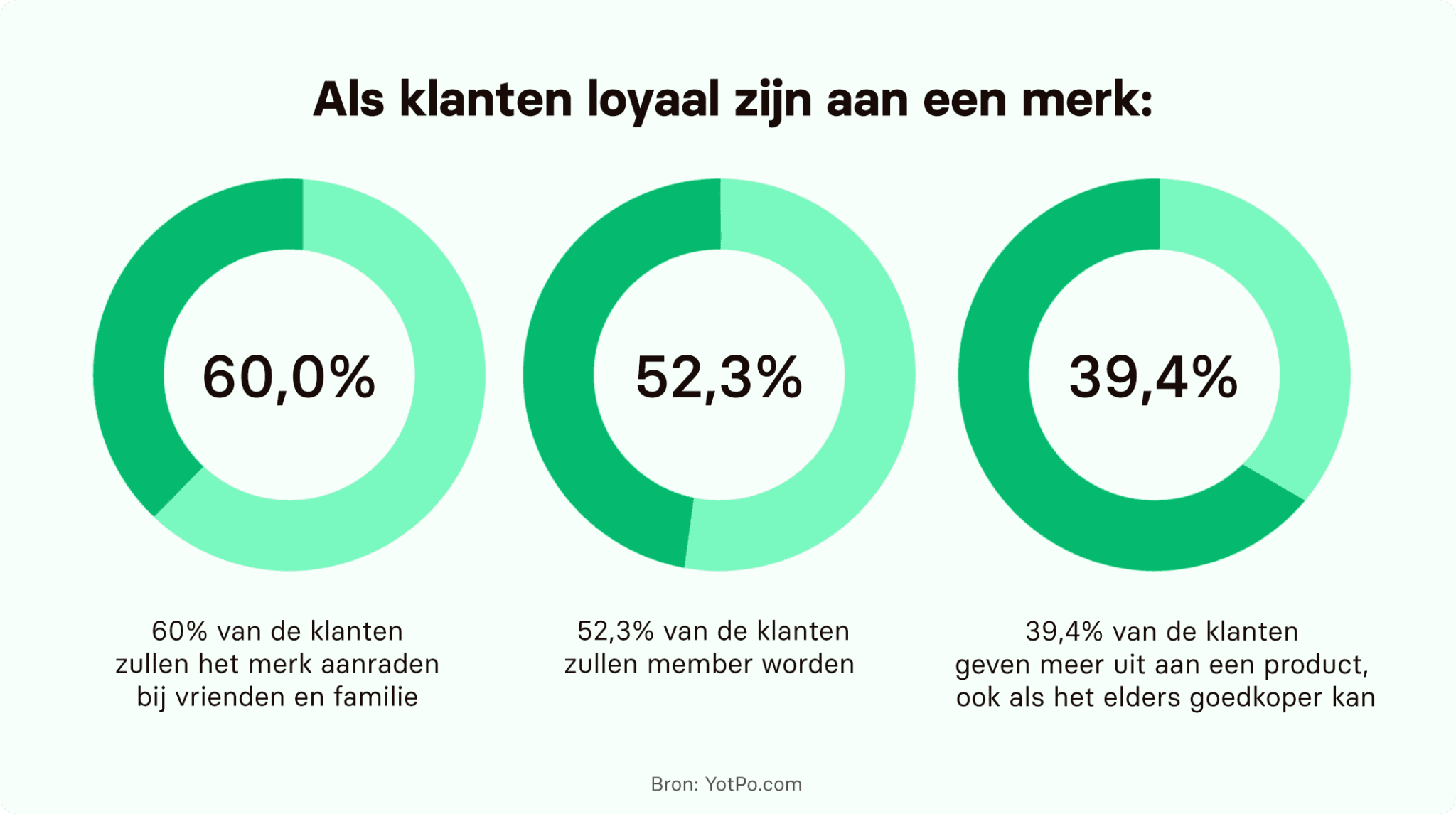
The goal of omnichannel communication is to build a strong bond with the customer and to create higher brand loyalty. Brand loyalty is important because it is strongly reflected in your company's figures. A loyal customer spends on average 67% more per purchase, for example, than a new customer would. While 85% of companies recognise the importance of customer loyalty, they do not put enough time and money into it. They spend on average only 0 to 25 percent of their marketing budget on existing customers (Sprout, 2016).
How do you set up an omnichannel communication strategy?
A good omnichannel communication strategy consists of several components: design, content and flow. These three elements therefore all need a lot of attention. By following these four steps you set up a good strategy:
Step 1. Write out your brand personality
To set up a good omnichannel strategy it is important to know in advance exactly what you want to radiate. Look at the image you would like to have and how you achieve it. Do you mainly use formal or informal language? Do you give strictly necessary answers or do you always offer extra information? To draw a single line it is important that it is clear to you and your staff how you (are going to) communicate. Include your colour schemes here too and the type of images you use.
Step 2. Know where your audience is
To anticipate your target audience properly, you have to know where your target audience is active. The social channels on which your target audience is most active should therefore be the first to be included in your omnichannel communication. Adapt your tone of voice, stop using outdated images and make sure your customer service is present in the chat. This means you no longer have to refer people to other channels.
Step 3. Determine what is needed for flow between channels
By the flow of channels we mean particular promotions that run cross-media. Earlier in this article you read the example of loyalty points that you would normally collect in the shop, but that you can now also obtain through particular actions on Instagram. This is a good example, because it connects offline and online sales points. It can also happen between online channels, though. Make sure, for example, that you carry a promotion you start on Twitter through on Facebook; think of a prize draw in which you have to carry out actions on both channels.
Step 4. Bundle all your contact channels
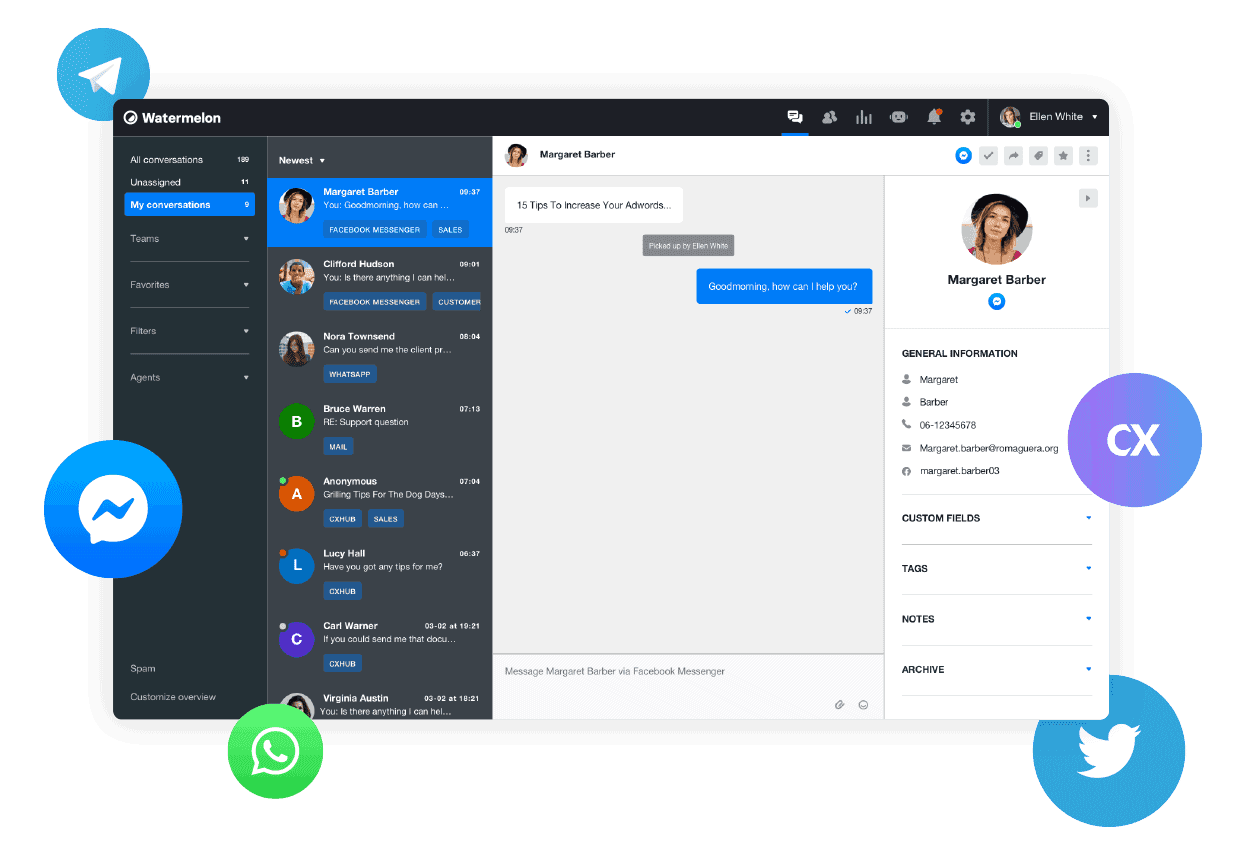
To carry out omnichannel communication properly, it is important that you keep an overview at all times. Switching between different channels is time-consuming and it makes you see the different channels as separate media. Bundle all your customer contact channels, therefore, into a single piece of customer service software, which lets you easily pick everything up in chronological order.
Raise your customer loyalty now
When you apply these steps, you quickly notice an improvement in your customer loyalty. Moving from a standard communication strategy to an omnichannel strategy is time-consuming at first, but saves you time later. Your customers will see your company as a single whole and recognise the company faster. Watermelon offers omnichannel software, which lets you easily apply your customer service on all the popular channels. Connect every channel, see all customer contact come in on a single platform and easily forward conversations to colleagues. On top of that you easily build your own chatbot without programming! Curious? Try it yourself and create a free account.


