Good customer service is the basis for retaining your existing customers and gaining new ones. Your customer service is the face of your company and you naturally want that encounter to be remembered positively. To ensure that, you can make use of various kinds of software that do not only support your customer service but also optimise it. Your customers are not happy, after all, when you offer a poor service. Avoid dissatisfied customers and a service that lags behind. Read about the different kinds of customer service software in this article and which of them suits your company.
What is customer service software?
Customer service software, also known as support software, is a tool that helps with managing and organising customer contact. This can be deployed for questions from (potential) customers but also as B2B customer support software. This software creates a better overview of which customer expects an answer when. This means the technology offers you the chance to improve the speed and quality of your customer service.
Why customer service software?
The importance of good customer service is something practically every company is aware of, yet we still often see missed opportunities here. Customers hear ‘You are next in the queue’ all too often, only to have spent half an hour simply waiting. This undesirable result comes from understaffing in the service department, which means customers have to wait longer and service staff come under pressure. Customer service software can help with this, by simplifying work processes or by catching part of the first-line customer contact, for example.
"After only one positive experience with a company, 77 percent of people will recommend the company to a friend!" - Qualtrics
Customer service software: the differences
There are several kinds of tool and software that can lift your customer service to a higher level, in order ultimately to generate more income. This support software can vary from ticketing systems to automated chats or live chat functionality. Below you will find an overview of all the different kinds of support software and their associated pros and cons. To make a good choice, work out for yourself which features of the different technologies you consider most important.
1. Ticketing systems
A ticket system, also called a support ticket system, is software that collects all the questions, remarks and any complaints you receive from (potential) customers and manages them in one location. Every question is converted into a ticket, with the ticket being assigned a ticket number. This type of support software works quickly and efficiently on a large scale. The disadvantage of a ticketing system, however, is the impersonality that comes with it. As you have just read, every customer is literally converted into a number, which can produce an impersonal feeling in both your customer and your service staff. That way you distance yourself from the customer behind the question and the focus lies purely on processing numbers as fast as possible.

The importance of a personal approach
The customer at the centre: that is the approach most companies guarantee. Yet a system in which working through a number takes precedence over personal attention is not focused on the customer's wishes. Get to know your customers, and their possibly recurring problems. Do not see online support as a barricade between your customer service and your customers. Use smart technology and staff precisely in order to support the customer, wherever that is needed.
“It is time to consider an entirely different approach: building people-focused customer service thanks to great people and smart technology.” - Kristen Smaby, Being human is good business.
2. Help desk software
What helpdesk software does is bring all questions, complaints and remarks together in one program. On top of that, customer service staff can communicate via support software, and see who is working on a particular customer question. This type of software is suitable for every kind of company, ranging from a relatively small customer service with only a few staff to an extensive customer service with hundreds of staff. The advantages of help desk software vary, but the software strengthens internal and external communication in particular by integrating different channels and customer questions into a clear dashboard.
Streamlined customer contact
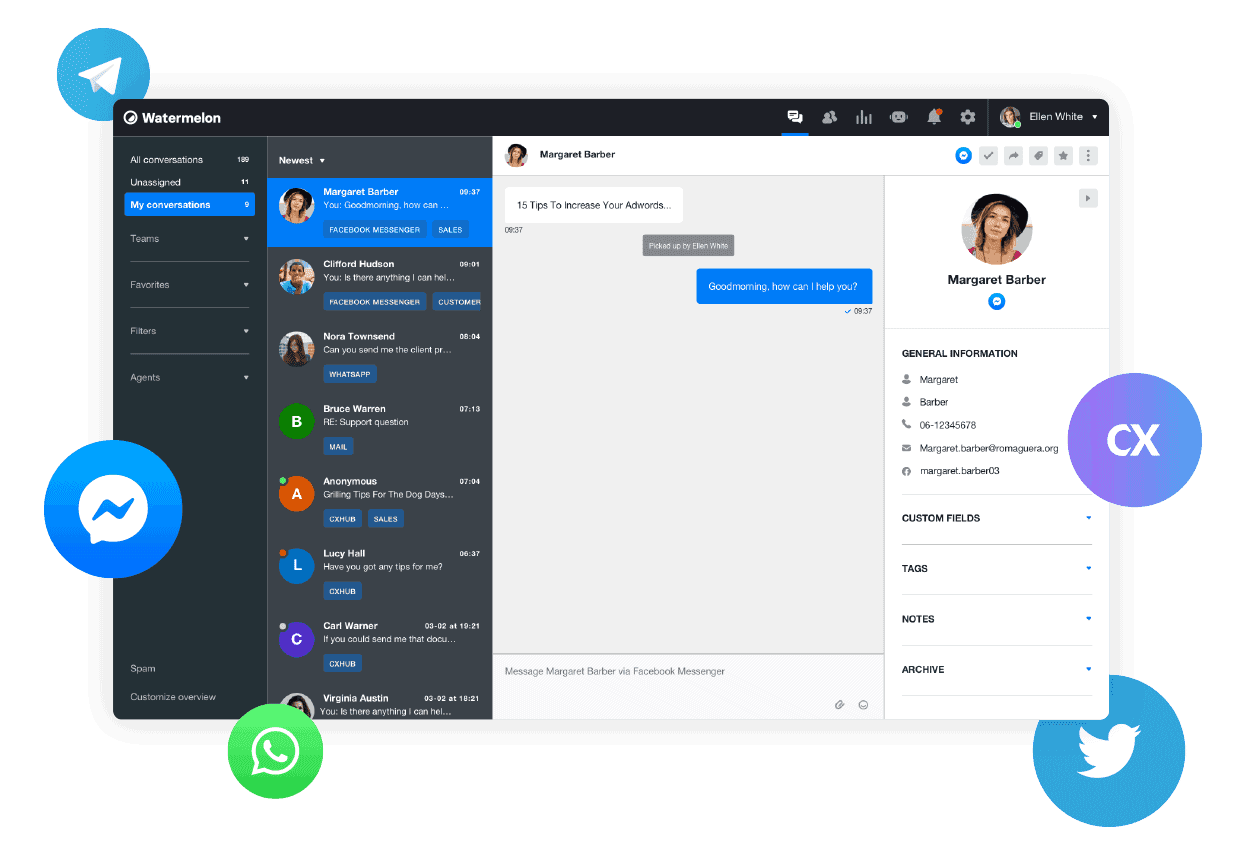
When you use helpdesk software, all your customers' questions come in in one place, regardless of which channel the customer uses. Thanks to the multichannel software approach it does not matter whether the question is asked via WhatsApp, Facebook Messenger, Twitter, email or another popular channel. This saves time, because your staff do not have to keep up with different channels. With help desk software you easily build a customer file, in which an ongoing matter is briefly summarised. That way everyone in the department can get going straight away, without the customer having to explain the situation again. A member of staff who cannot work it out alone can immediately call in a colleague's help with the helpdesk software.
3. Live chat software
A live chat function effectively lets you chat with your website visitor through your website. Perhaps you have seen this on other web pages already. When your website visitor or customer has a question, he or she clicks on the chat function, and that is how the conversation starts. The handy thing about a live chat is that your visitors can quickly type a question, without effort. So they do not have to call or stand in a queue; they simply get an immediate answer to their question. You can also integrate your live chat software with messaging giant WhatsApp when you are a Watermelon customer. That way your customers can contact you in an extra low-threshold way, via an app they already know from daily use anyway.
4. Automated chats with chatbots
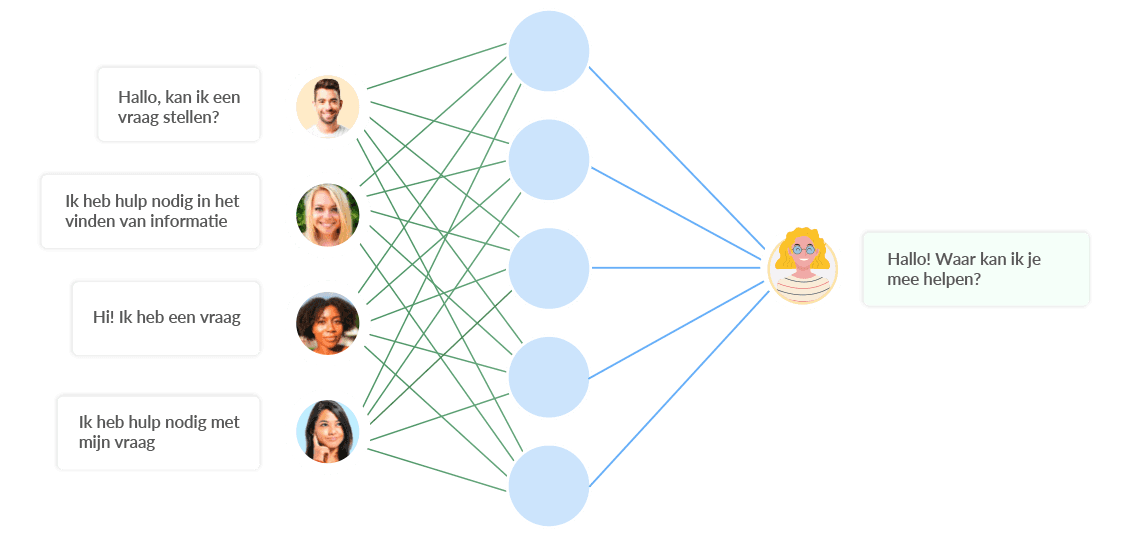
Chatbots are the great front-runners in the field of customer service software. This automated chat function means your customers are dealt with 24 hours a day and 7 days a week. That way you increase your availability. When you then pair your bot with several channels as well, this availability is increased again. What this chatbot does online is catch the first-line customer contact that a member of staff is normally responsible for. This lowers the workload and improves work processes by leaving time over for more complex matters. A chatbot also saves considerable costs, which mount up as time goes on. Suppose you hold 250 conversations a day that cost a human member of staff an average of 3 minutes per conversation. That is 750 minutes, in other words 12.5 hours. These hours are eliminated when you have a chatbot catch these questions.
5. Conversational AI Platform: all in one
When you want to combine all the customer service software mentioned above, that is possible too. By combining this technology you assure your company of a better workflow, cost saving, greater availability and you are ready for the future. By means of this support software you can make use of a hybrid cooperation between employee and chatbot. Can your AI chatbot not work it out alone? Then the conversation is automatically forwarded to a human member of staff. That way contact stays personal and the customer is helped properly. All these powerful features come together in Watermelon's Conversational AI platform.
Thanks to an all-in-one Conversational platform:
You increase your reach
You improve the workflow
You save costs
You are there for your customers 24/7
Your customers get an immediate answer
What does customer service software cost?
Customer service support software varies in price. It depends on which system you prefer and how many different options you want to have. Curious? Try it yourself and create a free account.


