Are you looking for a way to structure your customer questions? Then while googling you will certainly have come across the term ‘ticketing software’, ‘ticketing system’ or ‘ticketing platform’. In the search results one benefit after another is fired at you, but when is this software really of importance to you? And what should you look out for when choosing such a system? In this blog we try to describe that as concretely as possible!
Right. What is ticketing software?
Ticketing software was brought into being to process your customer questions in a manageable way. It is a single digital environment in which all your customer questions are collected, labelled, stored and archived.
Why do people choose ticketing software?
In one word: overview. With ticketing software it becomes clear which subjects and complaints are being raised by the customer, how long those tickets have been sitting there and who is picking them up. This lets companies apply their SLA policy better, and prevents an issue sitting untouched for days or even weeks.
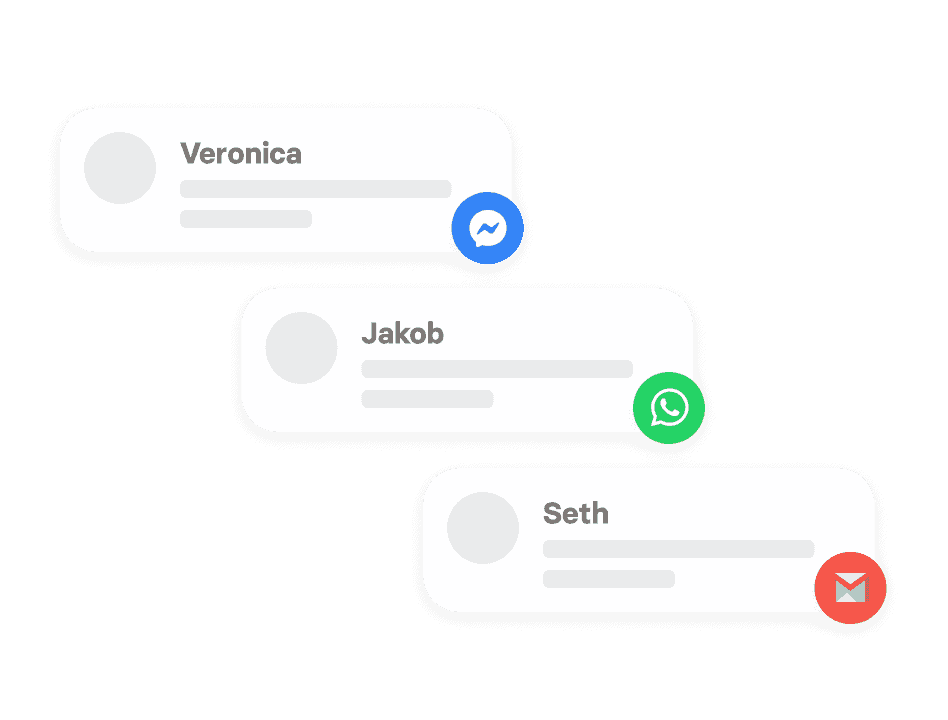
On top of that, the social channels are the culprit behind the lack of overview. Where customer service once revolved mainly around telephony, there is now email, Facebook, WhatsApp, Instagram, live chat on the website, LinkedIn, Telegram, and so on. Social media channels have sprung up like mushrooms in recent years, and every audience has a favourite channel where they can often be found. Companies climbed aboard this trend of an easy way of advertising and doing customer service en masse. That did mean, however, that customers became more and more used to the fact that they could contact a company on that channel too. These days you are at a disadvantage when you cannot be reached on Facebook Messenger but your competitor can.
Having to be present on so many channels created chaos. Customer service staff switched between one channel and another, and it became difficult to work through all the questions chronologically without overlooking something.

And so: ticketing software
Exactly. This software offered structure in the chaos. Through ticketing software the questions from all channels were thrown into a single overview. As if the customer digitally takes a numbered ticket, the way you do at the butcher's. Several customer service staff can call up, forward and/or answer these numbers chronologically. On arrival the customer questions can also be categorised: is this question urgent or not? Is it a question about a product, an order, a shipment, a complaint or a compliment?
Ticketing software: old-fashioned?
This may all sound well and good, but there are also companies that deliberately do not choose ticketing software, and prefer other supporting software. The biggest reason for that lies mainly in speed. Although the organisation of a ticketing system did bring some calm to the chaos, the ever faster digital world brings expectations with it.
Instant gratification
The speed with which the weather is now ‘quickly’ checked, a pair of new shoes paid for online, the number of likes on a new Instagram post looked at, is known as “instant gratification”. The consumer responds immediately to a stimulus (“Did I just feel a drop?”), and this action has an immediate outcome (“Buienradar says it is going to rain, inside!”). This speed has also changed expectations of customer service. Waiting for an answer from customer service causes more and more irritation.
Frequently asked questions
This irritation is growing among customer service staff too. The customer no longer takes the time to read through the FAQs on the website calmly. So the number of frequently asked questions piles up, and customer service staff lose more and more time to simple copy-and-paste work. The administrative hassle around these questions is not only a waste of time; it is even more of a shame that the customer gets irritated by the fact that it also takes too long.
The drawback of ticketing software
This is also the biggest drawback of ticketing software. When a ticket is created, a customer has often had to fill in a form for it. Think of an email address and the message itself, but also ticking a particular subject category. These steps make the threshold for the customer to get in touch higher and higher. Certainly now that people are used to easier, faster alternatives for getting an answer to a question.
What is the alternative?
There is alternative software on the market that keeps the manageable way of working through centralising and labelling, but where the customer does not have to create a ticket. This software is designed in such a way that the speed at which today's digital economy runs can be maintained. It is, after all, odd that paying for a shopping basket sometimes takes less time than waiting for an answer from customer service. Alternative customer service software includes, for example: helpdesk software, live chat software, multichannel software or a conversational AI platform.
How does this alternative software work?
The alternative software, such as the conversational AI platform from Watermelon, does broadly resemble ticketing software. Although we get a lot of grief from our developers when we draw the comparison between ticketing software and Watermelon, the bundling of channels and the manageable way of working do resemble ticketing software to some extent. You can attach a status to it, forward a question to a colleague, or attach a label to it.
Tickets versus conversations
A ticket feels comparable to an email: it has a subject, an email address, a message window often with a salutation and sign-off. Other software, such as Watermelon's, feels more comparable to a chat message or a text. There are ‘short lines’: instead of queueing at the information desk, you have a quick (digital) word with a member of staff. Where a customer can often wait days, sometimes weeks, for the answer to a ticket they created, with a conversational AI platform a customer gets an answer within a few minutes. That is more in line with the expectations of the customer in 2021.
Lightning-fast answers with an AI platform
Now we can imagine you thinking: whether I use a ticketing system or a platform, it is still the same staff answering the questions, isn't it? How is this faster?
A good question. The conversational AI platform does, however, have particular features that encourage faster working: it is a modern approach within customer contact. On top of that, a chatbot can also be put to work on the platform. Thanks to AI the chatbot handles all the frequently asked questions that come in. The customer gets an answer at lightning speed this way, without a member of staff being involved.
Not finished reading?
Read our whitepaper: How companies use chatbots successfully.


