In recent years customer behaviour has changed enormously and in the world of e-commerce customer service has become more important than ever. Customers want to be helped fast, otherwise they would rather buy the product or service from a competitor. Customers want to feel connected to a brand before they make a purchase. Conversational Commerce guides the customer through the sales funnel faster, by entering into a personal conversation. But how can Conversational Commerce persuade your customers to make a purchase? In this blog we explain what Conversational Commerce is, the benefits, the various channels, and we give you two examples of Conversational Commerce.
What is Conversational Commerce?
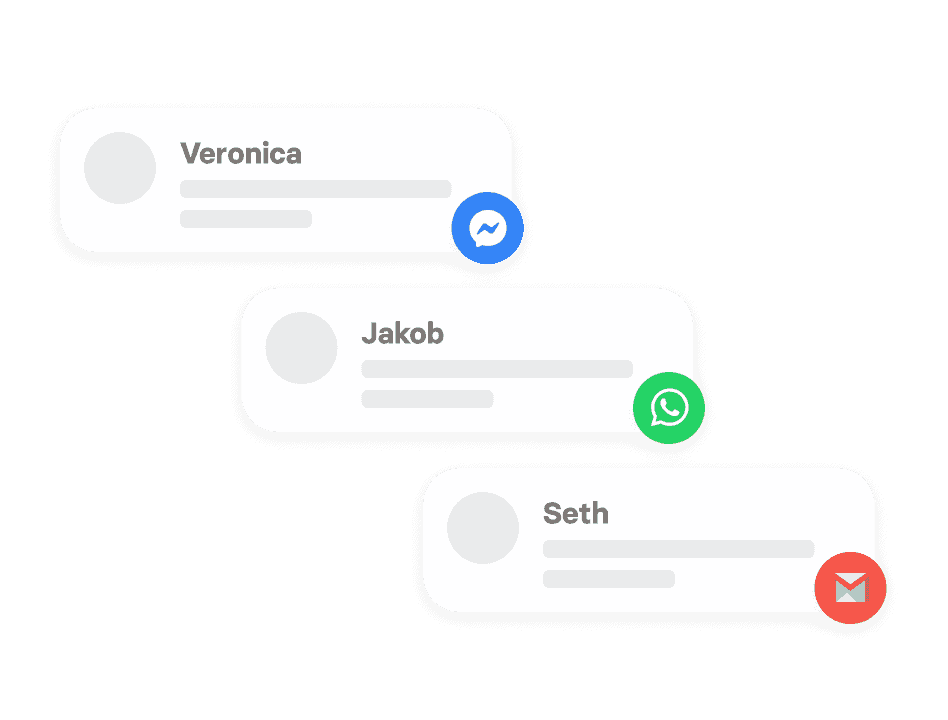
Conversational Commerce, also known as chat commerce or conversational marketing, is a way in which online retailers enter into conversation with their customers in order to sell their product or service. This can be done in all sorts of ways: through a chat(bot), a voice assistant or a messaging app such as WhatsApp or Facebook Messenger. These Conversational Commerce tools help the customer through the sales funnel faster. Think for example of a customer looking for a new television. When they visit the website, it can be difficult to make a choice. When a live chat is available where the customer can get personal advice, the customer will be quicker to make a purchase.
The benefits of Conversational Commerce
But what are the benefits of Conversational Commerce? And what can Conversational Commerce bring your webshop?
Reduce the number of basket abandoners
Research shows that more than 75% of filled shopping baskets are abandoned without being paid for. This can be down to high delivery costs, but many people also use the basket as a wish list or go on to look at the competition first. What if you could reduce the number of abandoned baskets through Conversational Commerce? Send a live chat message, for example, to customers who have products in their basket but have not yet bought anything. Perhaps you can help these customers make their decision. Are they still unsure about something? Do they still have a question about the product? By entering into conversation, you can remove these pain points or show alternatives.
Contact with the customer
Not every customer likes making contact by telephone while they are still orienting themselves. So give (potential) customers other options for getting in touch as well. 71% of customers say they would rather spend their money with a company that can also be reached in another way. Give the website visitor the possibility of contacting you in a low-threshold way, through a live chat or chatbot, for instance.
Ask for feedback
You can of course ask your customers for feedback in the traditional way, through a survey or form. But it is far more effective if you ask for feedback by means of a personal conversation. After every chat with an agent or chatbot, for example, ask how the customer experienced the conversation. That way you learn more about your customers' needs and easily adapt your strategy to them.
Opportunities for up-selling and cross-selling
Once the customer has chosen one of your products or services, the step to a next product or service is usually smaller. Make use of up-selling and cross-selling by looking at the customer's order history and advising on the purchase of a product that goes with it. Think for example of a protective case for the customer's brand-new camera. You can also use this information to remind the customer that it is almost time to reorder a particular product. When you have sent your mother a card for her birthday via Greetz, for instance, the following year Greetz automatically sends an email to remind you that her birthday is coming round again.
Different Conversational Commerce channels
How are you going to profit from Conversational Commerce? You can do it with the following channels:
Live chat
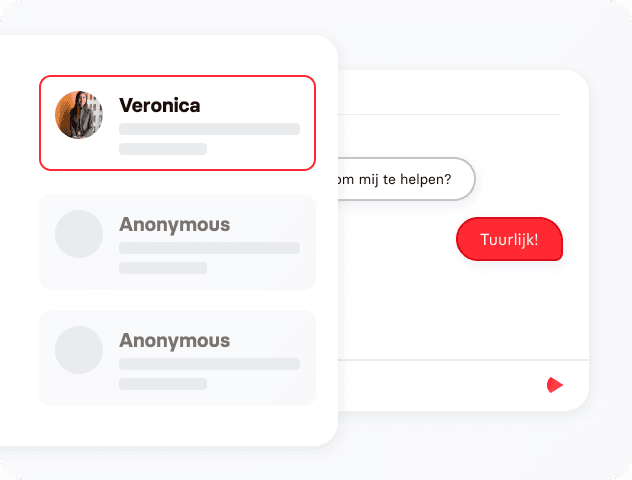
The live chat is one of the most popular channels for Conversational Commerce. When the customer visits your website, they can ask for help with their search for a product straight away. Enter into conversation with your customer, give them personalised advice or help them further with their questions. The live chat can be placed on your website in a few clicks.
Chatbot
Besides a live chat, you can also deploy a chatbot. A chatbot can even help several customers at once and can remember and store your customer's details. You can choose to implement a chatbot on your website, but also on various messaging platforms such as WhatsApp or Facebook Messenger.
Messaging apps
A messaging app such as Facebook Messenger or WhatsApp is a chat platform on which you are in direct contact with your customer. Through these messaging apps you can also use memes, GIFs, videos and emoji in your conversations, which keeps contact with the customer personal and human.
Examples of Conversational Commerce
The conversion-raising chatbot of XO Hotels
The chatbot of XO Hotels, Zoë, helps customers book their hotel stay. The chatbot helps them reserve their room and answers questions customers may have about the hotel: are pets allowed? Is breakfast included? Is there parking at the hotel? By entering into conversation with the customer, they will book a stay sooner. Leads are therefore brought in faster.
Get started with Conversational Commerce yourself
Now that you know what Conversational Commerce is, you can get started yourself! Implement a live chat or chatbot and enter into conversation with your customers! That way you raise your customer satisfaction and sales and bring in new leads. Read on!


